
SEO (Search Engine Optimization) is the practice of optimizing websites and digital content to increase visibility, traffic, and brand authority across search engines and AI search. It includes technical optimization, content strategy, link building, and ensuring brands are accurately represented wherever people and AI find information.
Effective SEO requires understanding user search intent, targeting the right keywords, and ensuring a strong technical foundation. When done well, SEO drives targeted traffic, attracts potential customers, and strengthens brand awareness, ultimately supporting leads, sales, and revenue.
Getting started with SEO
If you’re just beginning your journey into SEO, this guide is for you. We cover everything, including: what SEO is, the different types of SEO (you can become an expert in any one of these), SEO specialties, a deep dive on how search engines work, and how to do SEO in a step-by-step overview, so that you can hit the ground running.
This article is long; we really do cover everything. Look out for links to articles that elaborate on the topics you might want to learn more about in greater detail. There are also “Dig Deeper” callouts with long-form guides to help you get more information on SEO elements that most pique your interest. Think of this guide as a resource you can come back to time and again as you progress along your SEO learning journey.
Types of SEO specializations and ranking factors
Imagine SEO as a sports team. To win, you need both a strong offense and defense. But you also need fans (an audience) to root for you along the way.
Your team is built up of three components:
- On-page SEO: This is optimizing the content on a website for users and search engines.
- Technical SEO: This means optimizing the technical aspects of a website.
- Off-page SEO: This involves earning backlinks from high-quality websites and influencing brand mentions and brand sentiment.
Think of technical optimization as your defense, content optimization as your offense, and off-page optimization as your way to attract, engage, and retain a loyal fanbase.
Two of these pillars are firmly within your control. You decide what content you create, how it’s structured, how it answers intent, and how your site performs technically. But off-page SEO operates differently. You can influence it, earn it, and nurture it, but you can’t fully control how people talk and write about your brand online.
Next, let’s break down each component to fully understand how these three elements work together.
Content optimization (on-page SEO)
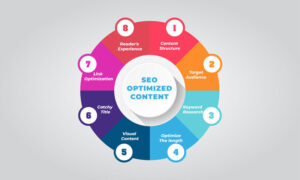
Content optimization (on-page SEO) is the practice of creating and improving the content on individual web pages so that it is useful, relevant, and easy to understand for both users and search engines. It focuses on aligning content with search intent, clearly communicating topic relevance through text and structure, and optimizing on-page elements such as headings, internal links, metadata, and multimedia.
Effective content optimization serves two purposes:
- Human engagement: Content needs to engage readers and serve a purpose, such as helping, educating, or guiding them in solving a problem and taking action.
- Search engine readability and rankings: Content needs to be optimized so that search engines can understand what’s on the page, which means reading the code.
The goal is always to publish helpful, high-quality content. You can do this by understanding your audience’s wants and needs, using data, and relying on Google’s guidance.
When optimizing content for people, you should make sure it:
- Covers topics that are relevant to your audience, and on which you have experience or expertise
- Includes the keywords and phrases which are the words your audience would search to find the content
- Is unique and original content
- Is well-written and free of grammatical and spelling errors
- Is up to date and contains accurate information
- Includes multimedia (e.g., images, videos) throughout to break up the text
- Is better than your Search Engine Results Page (SERP) competitors’ content so that yours is the most useful
- Is scannable and visually structured in a way that makes it easy for people to understand the information you’re sharing (by this we mean: subheadings, paragraph length, use bolding/italics, ordered/unordered lists, reading level, etc.)
- Includes E-E-A-T signals through accurate information, credible sources, and clear authorship
- Includes relevant internal links to help users discover your content clusters (related content)
For search engines, some key content elements to optimize for are:
- Keywords and keyword clusters: Be sure to use the keywords that your audience is searching for. You figure this out in the keyword research phase. Then, you use keyword clusters to target multiple keywords on the same page. For example, “what is SEO,” “what is search engine optimization,” and “seo meaning” are three examples of keywords within the content cluster for this piece.
- Title tags: These tell search engines and users what the page is about; They should be clear, relevant, and include primary keywords.
- Meta description: This is a summary of the content that can influence click-through rate by clearly communicating the page’s value in search results.
- Header tags (H1–H6): These are used to structure content, helping search engines understand topical relevance and making it easier for users to scan and read the page.
- Paragraph text: The main content where your topic is clearly explained in a way that answers what the user is searching for. The words you’re reading right now, that’s paragraph text.
- Image alt text: Short, descriptive text added to an image’s code that explains what the image shows. It helps search engines understand the image and ensures people using screen readers can access the information it contains.
- Open Graph metadata: This is the metadata that controls how content appears when shared on social platforms, which supports visibility, engagement, and brand consistency.
- Content quality, including depth: How helpful, comprehensive, accurate, and competitive the content is compared to other results on the SERP.
- Internal linking: This means connecting related pages on your site to distribute authority, reinforce topical relationships, and guide users through the site.
- URL structure: This means having clean, readable URLs that accurately reflect page content and hierarchy, which makes them easier for users and search engines to understand.